5 Boats That Define the English (And One That Now Challenges It) Pt 1/2
01-06-02
“The sea has never been friendly to man. At most it has been the accomplice of human restlessness”
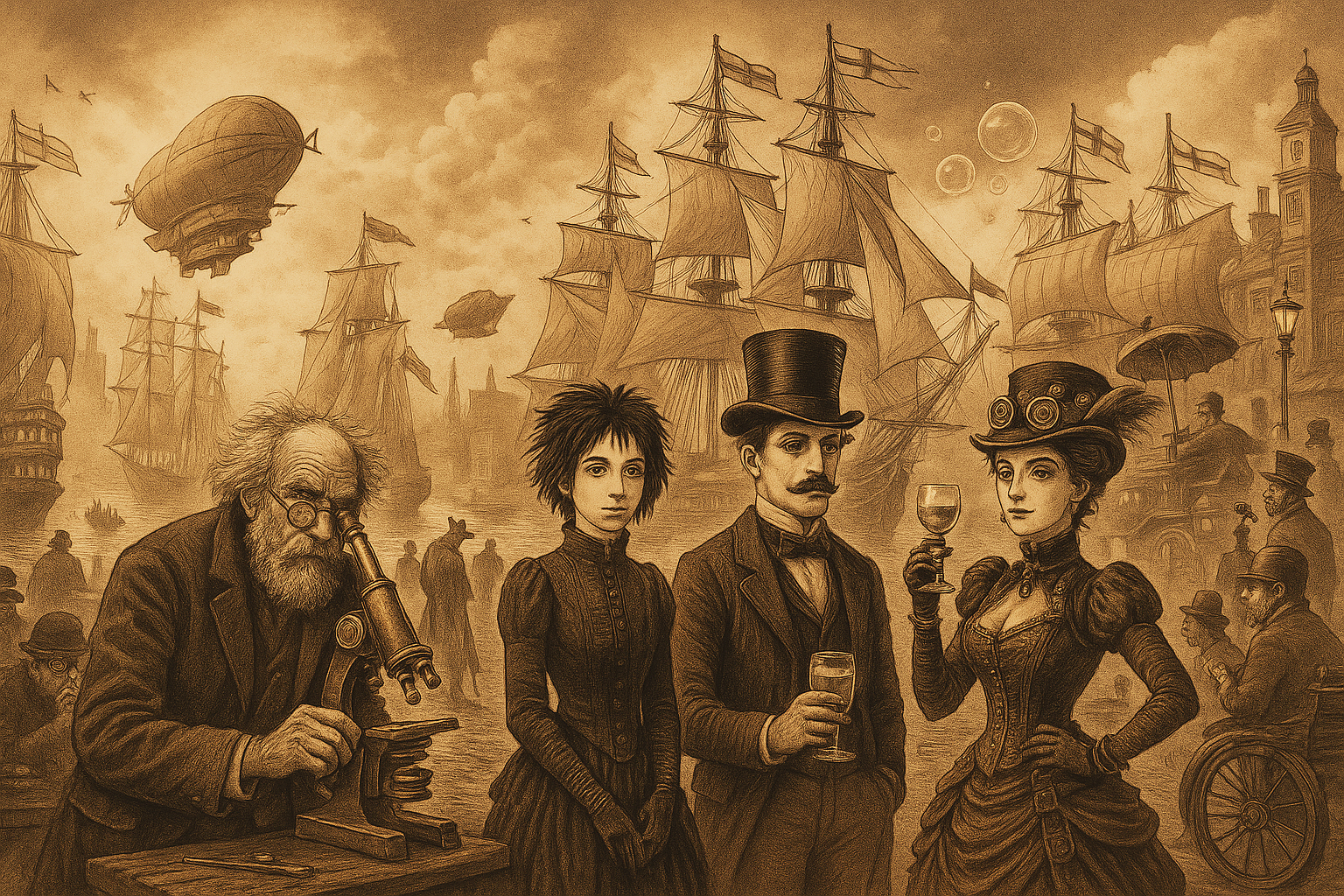
What actually defines the British character? Or more specifically, the English character
After my last post briefly wandered into British naval history for Remembrance Sunday, I couldn’t help but wonder, what actually defines the British character? Or more specifically, the English? You can rummage through Westminster, wave the Magna Carta about, prod a Yorkshire pudding or point at David Attenborough if you’re so inclined, but none of them really get to the guts of it.
We’re an island nation. Our story isn’t just written in the soil. It’s written in wood and iron, in coal and canvas, in courage, resilience and the sheer bloody-mindedness required to navigate a boat around a large, weather-beaten, heavily tidal coastline.
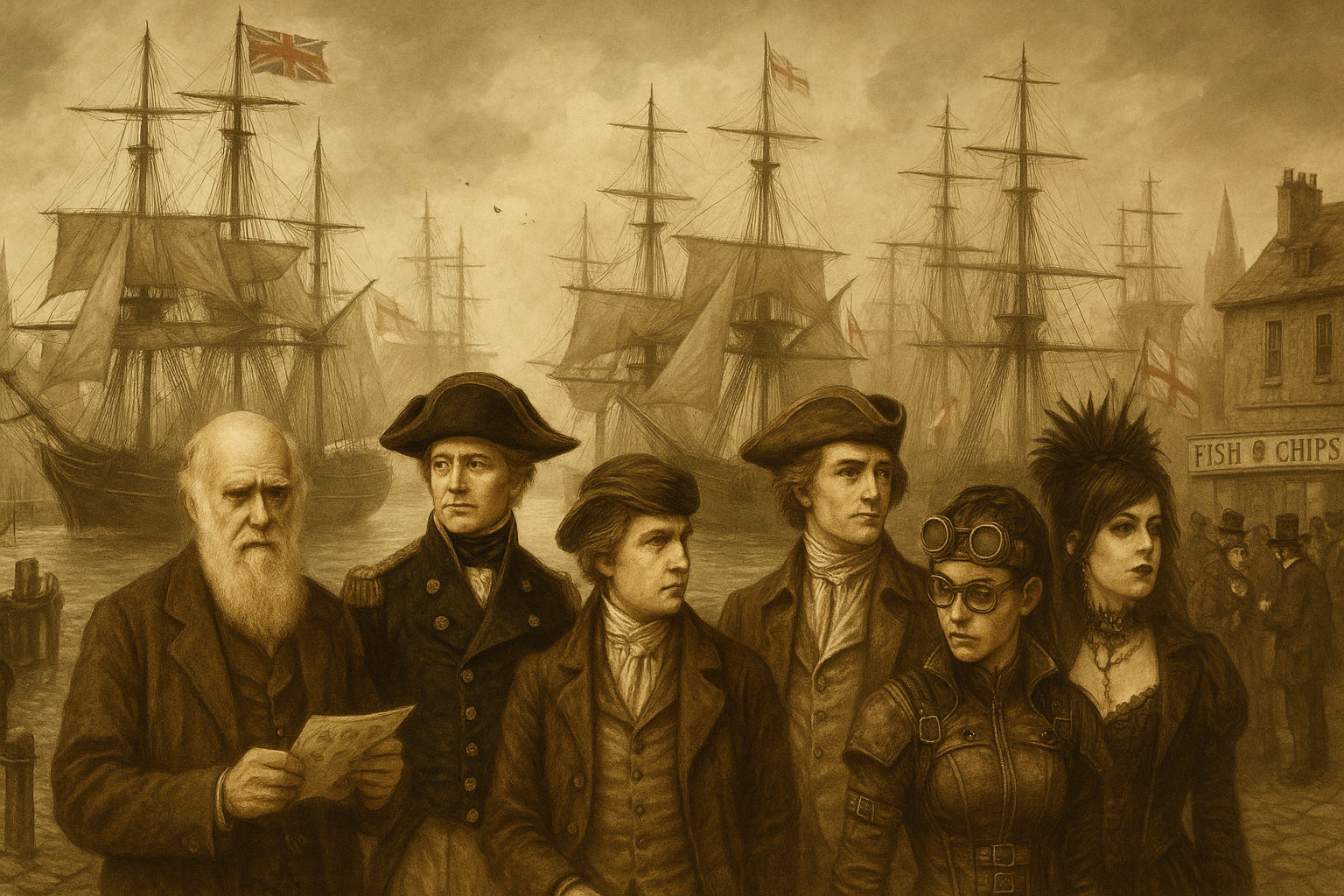
We’re an island nation with a large, weather-beaten, heavily tidal coastline
Perhaps a handful of vessels tell that story better than any law, legend or national treasure ever could (apologies to Paddington Bear and Mr Bean). These are boats that carved the English character with their keels. And now, at the end of that long maritime arc, it’s the smallest craft of all, the rubber dinghies in the Channel that test who we are far more than any gale, empire or undiscovered horizon ever did.
1. HMS Endeavour. Humble Beginnings, Ludicrous Ambition
To understand why, we need to start in Whitby, the gloriously oddball North Yorkshire town my mum’s family came from, and the place that inspired Bram Stoker’s Dracula. No connection by the way. In the book, Dracula’s ship, the Demeter, a Russian Black Sea schooner, smashes into the rocks, whereupon the blood sucking aristocrat leaps ashore as a giant black dog and bolts up the famous steps to Whitby Abbey. In the film, Coppola (because Hollywood thinks England starts and stops at Heathrow airport) moved the whole scene to London, triggering a Yorkshire tut so acerbic they still pickle onions in it today.
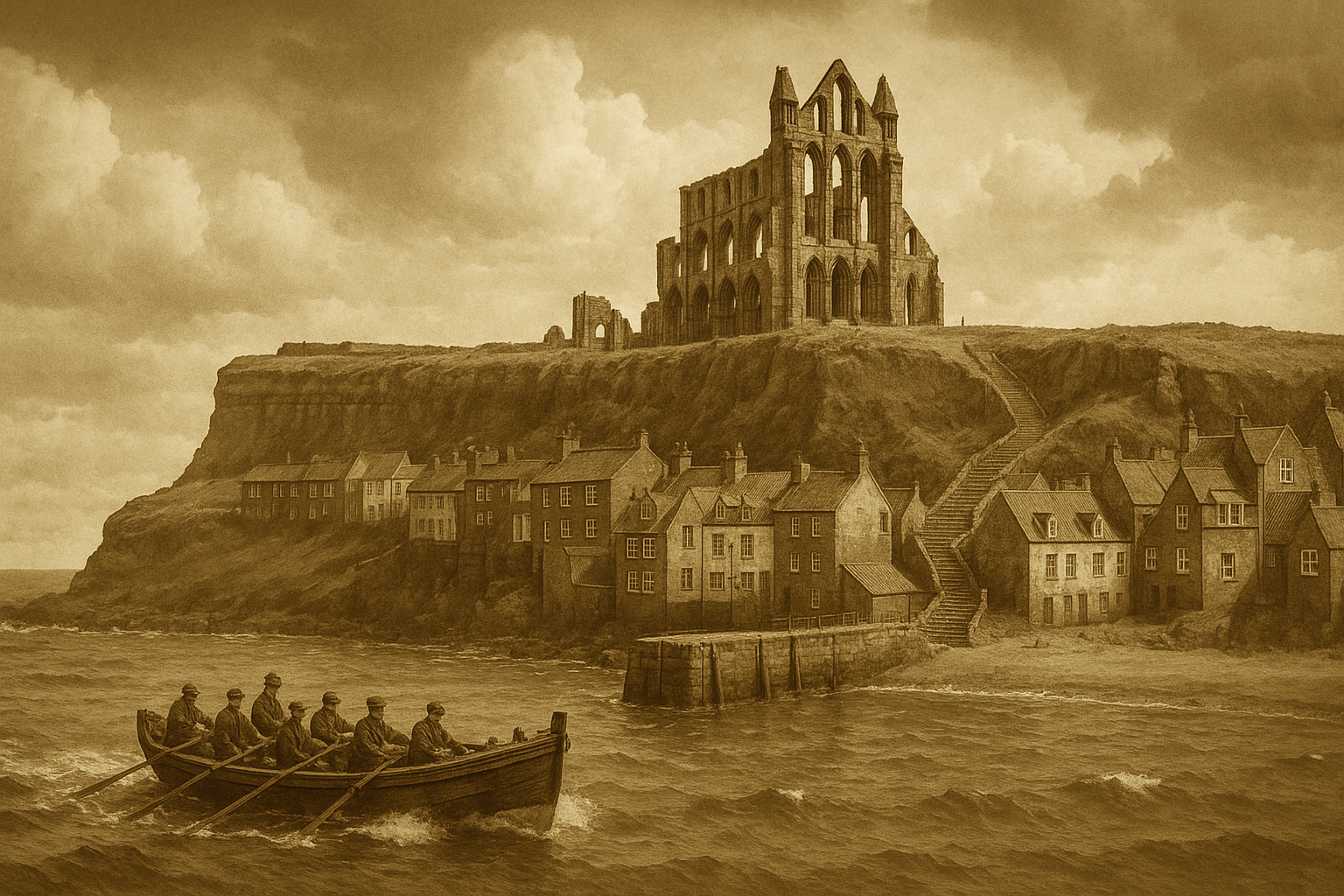
Shipwrecks were so common the town formed a volunteer lifeboat crew who thought nothing of rowing into storms to rescue fellow seamen
Whitby was steeped in salt, danger and maritime drama long before Stoker ever sharpened his quill. Shipwrecks were so common the town formed a volunteer lifeboat crew who thought nothing of rowing into storms to rescue fellow seamen. As Bill Bryson put it, “People in Yorkshire consider bad weather a sign of moral weakness.” And this lot were proving him right a full generation before the London-based RNLI even existed. London taking the glory again while Yorkshire does the hard graft. Is it any wonder Northern folk hold a famously dim view of those shandy-drinking southerners?
In 664 Whitby Abbey hosted a theological bar fight between Celtic and Roman Christianity, a quiet decision on a windswept cliff that shaped English religion for a millennium, and now provides a dramatic backdrop for thousands of selfies on Goth Weekends.
The what now?!
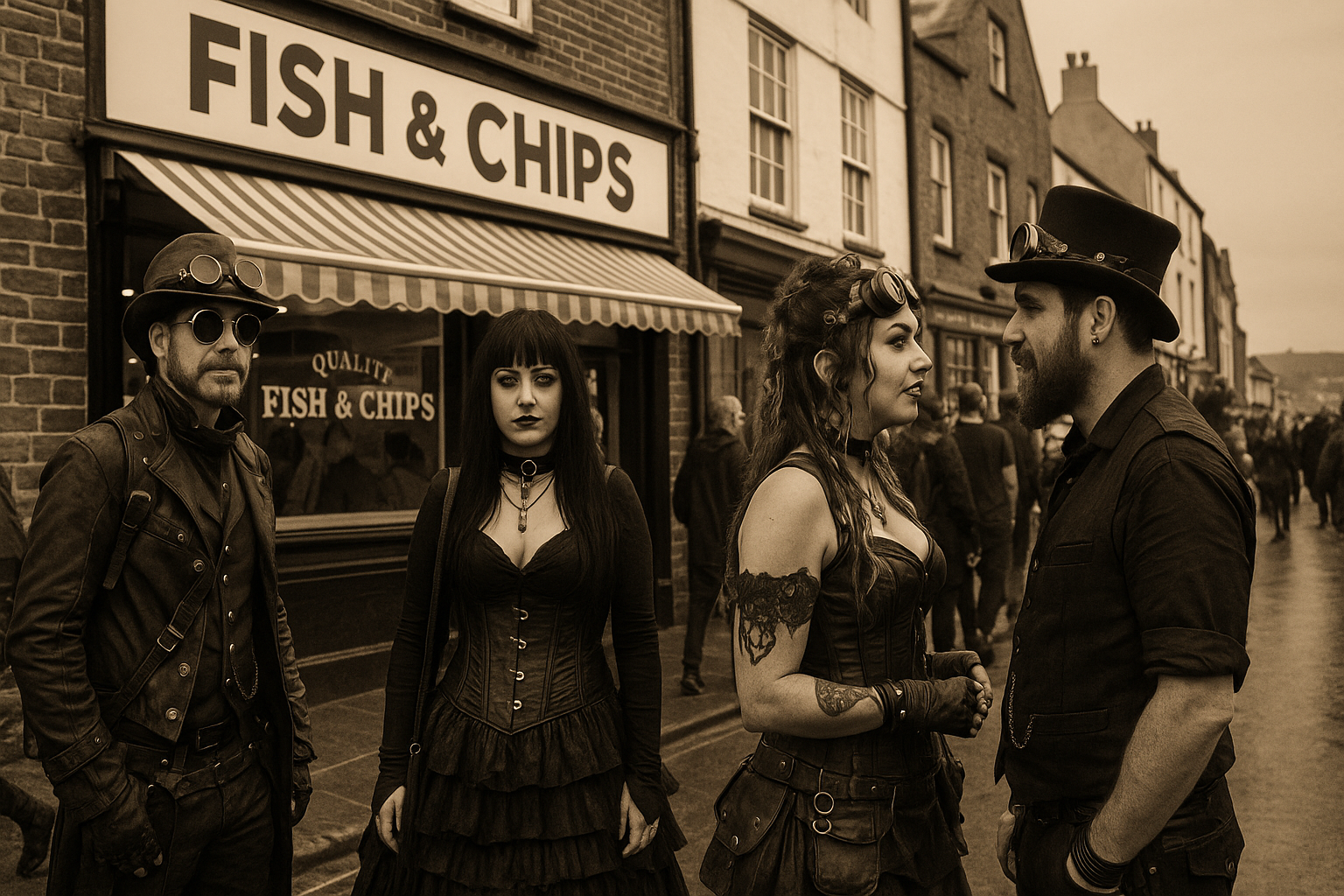
Whitby hosts biannual goth and steampunk festivals. It’s less a town and more a British eccentricity dispenser
You heard me, Whitby hosts biannual goth and steampunk festivals. It’s less a town and more a British eccentricity dispenser, with Victorian vamps and steampunk enthusiasts politely queueing in the rain for what are arguably the best fish and chips on the planet. Only in England could one windswept coastal town produce all of this and one of the greatest navigators who ever lived: James Cook.
Cook arrived in Whitby at sixteen, not as a prodigy but as the son of a Yorkshire farm labourer. A lad who traded the moors for a shop counter and then, through graft and sheer bloody-mindedness, fought his way to the quarterdeck. By the time Whitby spat him back out, he was already on course to become the finest navigator of his age.
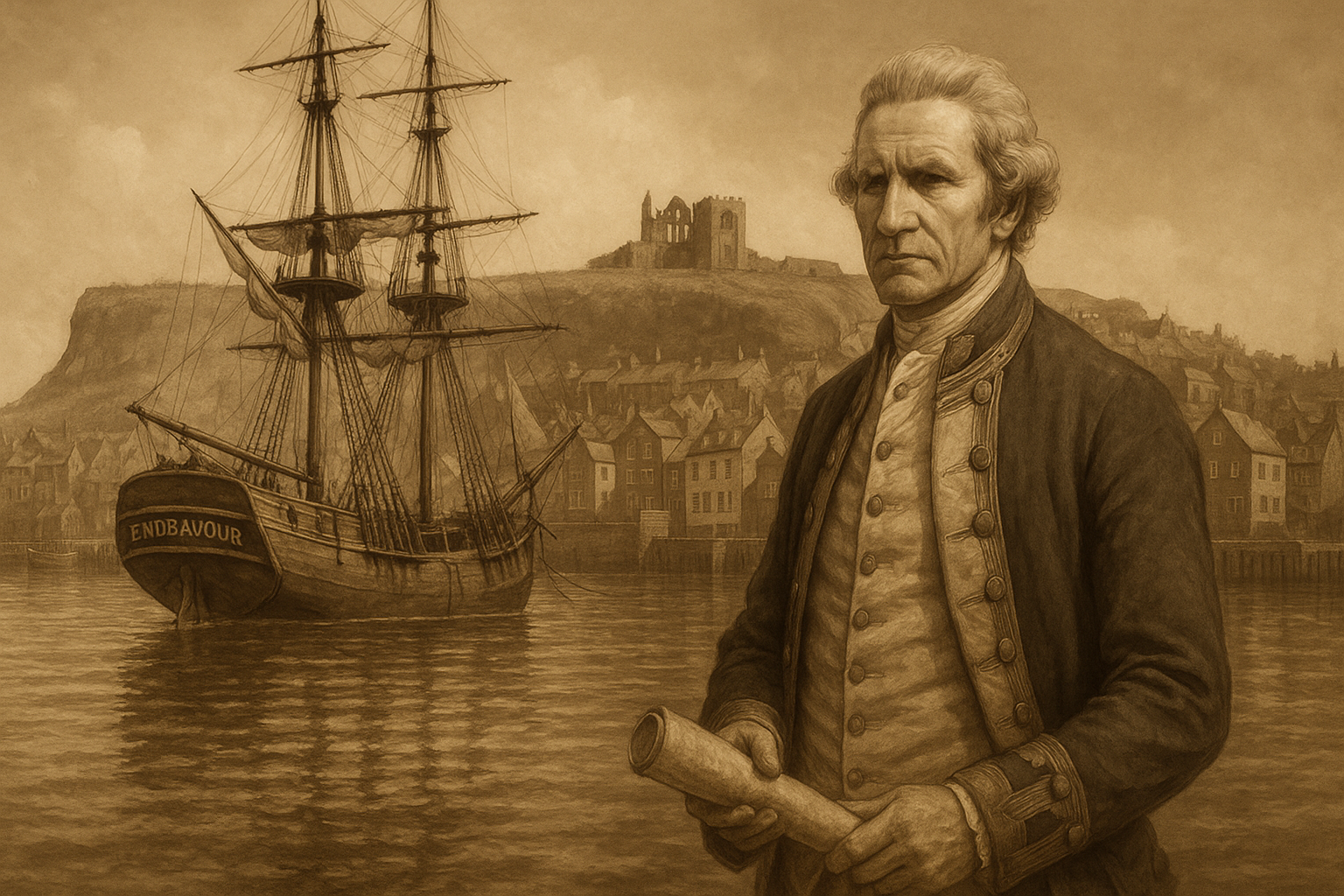
By the time Whitby spat Cook back out, he was already on course to become the finest navigator of his age.
His ship, the Endeavour, was cut from the same cloth: a squat Whitby coal barge with all the elegance of a floating brick. Unfussy, underfunded and annoyingly unstoppable, it carried that farm boy, armed with a pencil, a sextant and a ludicrous mission, to calmly redraw half the planet. A miracle to some, but to Whitby folk, a place built on wrecks, rescue crews and hard seas, it was simply what you get when grit meets opportunity. In Yorkshire they’ve always known: graft, not pedigree, maketh the man.
2. HMS Beagle. The Little Ship That Quietly Rearranged Humanity
A few decades later, an equally unimpressive vessel slipped its lines from Plymouth to quietly redraw the limits of human knowledge. HMS Beagle wasn’t built to change the world. It began life as a Cherokee-class 10-gun brig-sloop before being declawed and converted into a coastal survey boat. Yet it carried a young Charles Darwin around the world and straight into the history books.
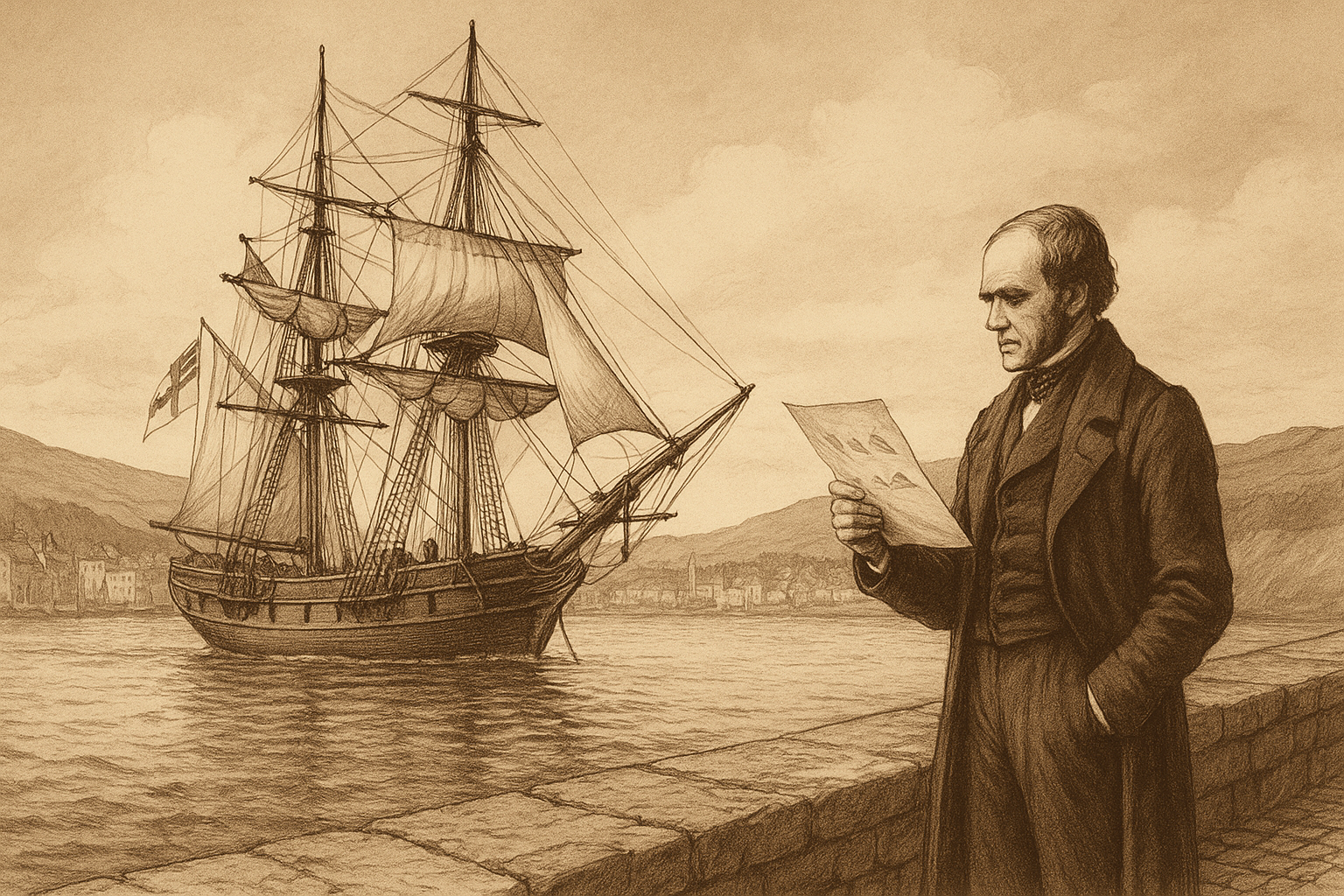
HMS Beagle wasn’t built to change the world, yet it carried a young Charles Darwin around the world and straight into the history books.
If Cook showed what England could do with opportunity and grit, Darwin showed what it could do with opportunity and curiosity. But like Cook, the story of how he ended up on the Beagle isn’t the heroic, destiny-drenched myth we like to imagine. It’s far more eccentric, accidental and wonderfully English.
The Beagle’s first captain, Pringle Stokes, went slowly mad on the previous voyage. Months of bleak Patagonian coastline, fog, loneliness and absolute authority with no one of equal rank or intellect to talk to. He eventually locked himself in his cabin and shot himself.
The Admiralty, realising that brilliant young captains tend to lose their marbles when left alone too long, devised a remarkably English solution: send them a gentleman to talk to over dinner. And that’s how Darwin got the job.
He wasn’t hired for genius. He wasn’t even hired as the ship’s naturalist. Darwin was essentially the Victorian equivalent of an emotional-support dog. Except instead of a Labrador, FitzRoy got a seasick Cambridge graduate to prevent him enacting a boom-tube early retirement like the last captain.
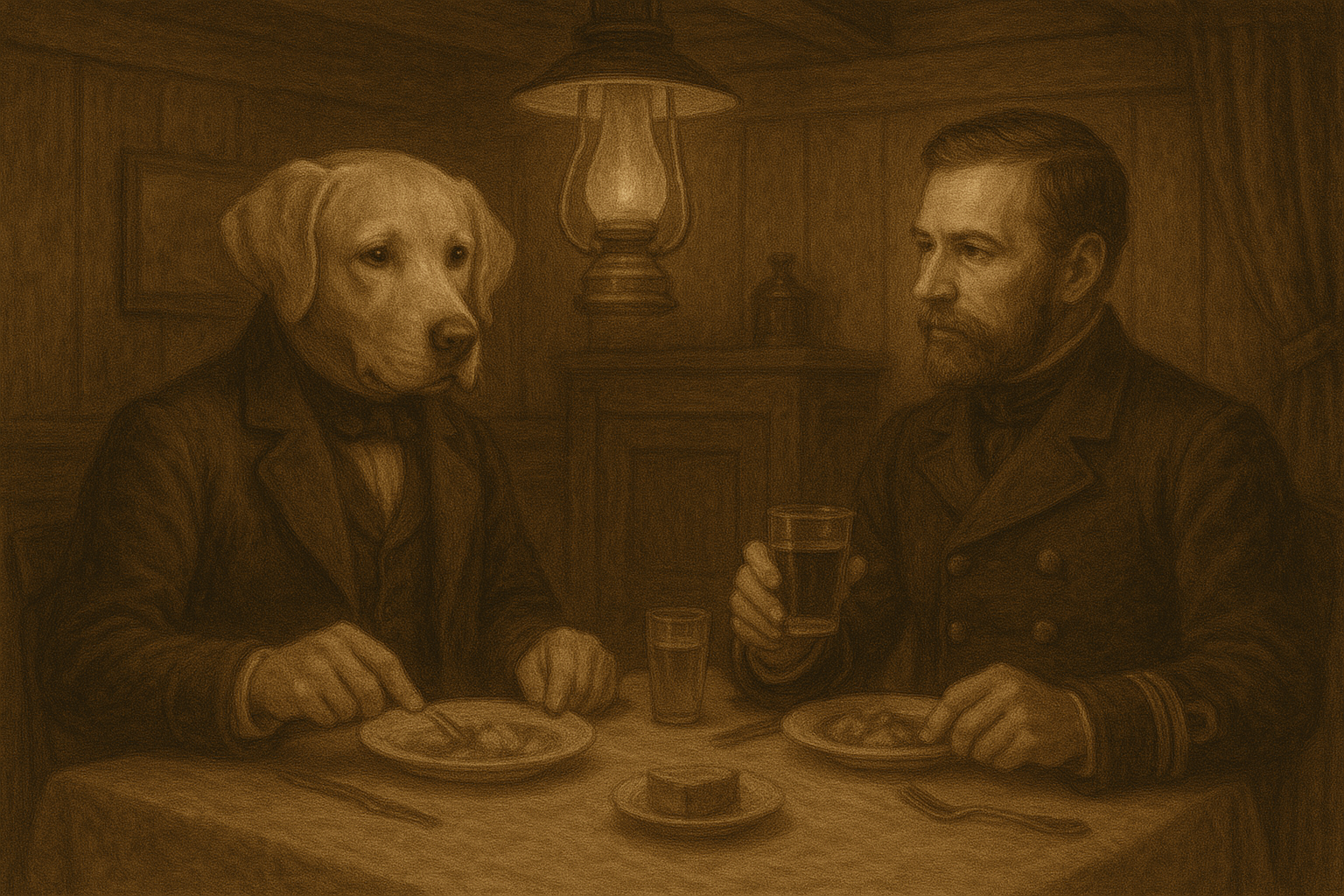
Darwin was essentially the Victorian equivalent of an emotional-support dog. Instead of a Labrador, FitzRoy got a seasick Cambridge graduate
And yet out of that painfully English workaround came the greatest scientific voyage of the age. Darwin’s seasick scribbles changed the world: evolution, natural selection, the reshaping of everything we thought we knew about life.
The Beagle story captures what Englishmen do best: stumble into world-changing discoveries through accident or through the dullest of endeavours, then quietly sit in a shed or a boat and overthink it.
Darwin: Chart a coastline, watch a few finches… and dismantle the foundations of theology.
Newton: Take a walk in an orchard, watch an apple fall… and quietly invent modern physics.
Turin: Sit in a shed full of nerds and ticking machines at Bletchley Park.. break the Enigma code, shorten WW2 and save millions of lives.
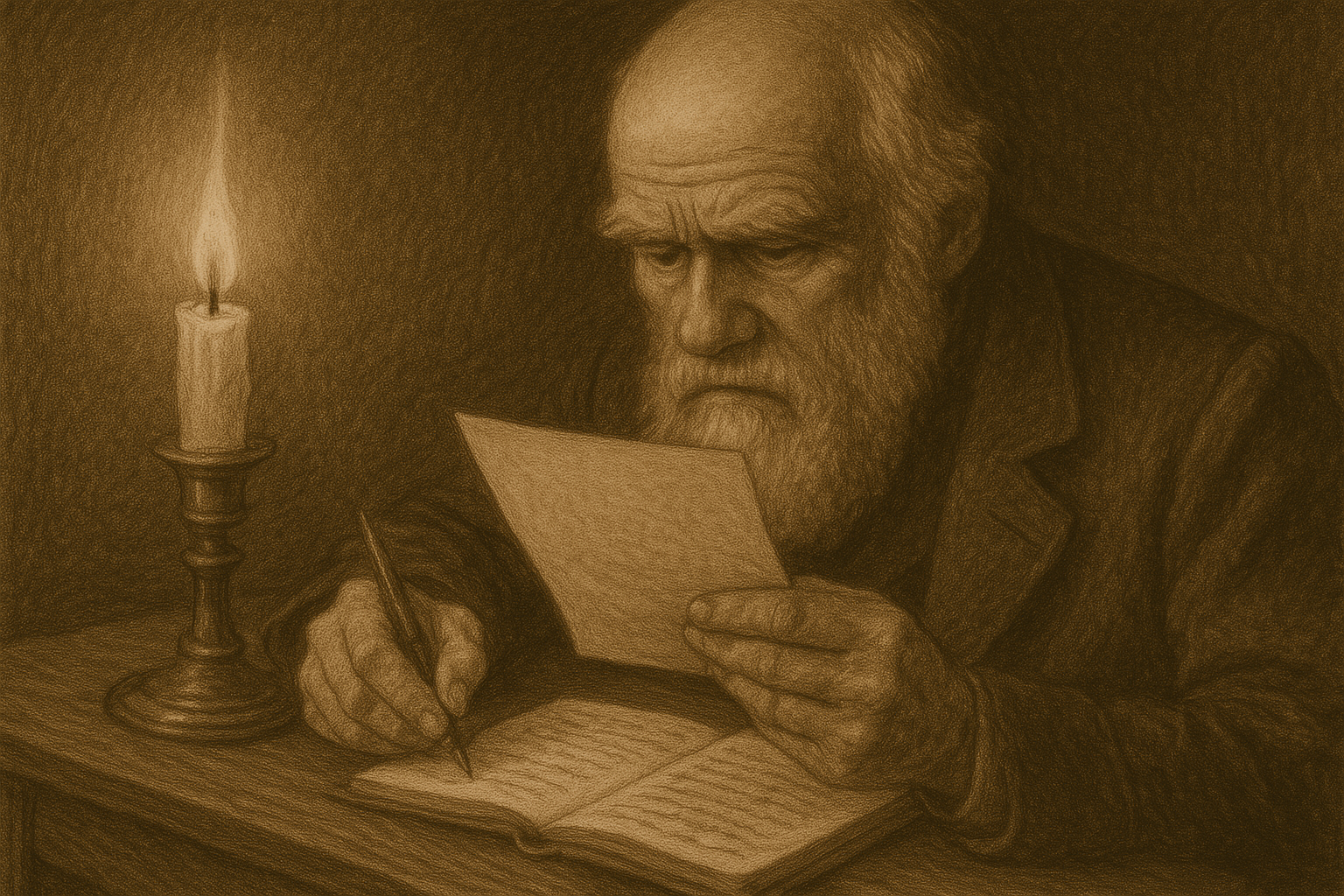
Darwin sat on evolution for twenty years because he didn’t want to upset the Church, the country, or his wife
But that’s not the end of the story. Darwin sat on evolution for twenty years because he was, of course, an English gentleman. He didn’t want to upset the Church, the country, or most importantly, his deeply religious wife. In the end he only revealed evolution because another nice chap called Alfred Russel Wallace, nearly published first. Proof that the strongest force in nature is an Englishman’s terror of his wife and fear of being embarrassed in front of the gentleman from the Royal Society.
3. The Black Joke. Britain’s Most Unlikely Moral Crusader
Darwin showed what’s possible when curiosity and stubbornness take hold. And once the English finally realise something’s wrong with the world, a strange moral imperative kicks in. A need to put it right, either with a notebook, a screwdriver, a cannon or even a declaration of war. So while Darwin was quietly redrawing the tree of life in the Pacific, the Royal Navy was busy redrawing human morality in the Atlantic.
The West Africa Squadron was established in 1808, right after Britain abolished the slave trade, and stayed at it for nearly sixty years. A pack of underfed, overworked British sloops tearing up and down the Gulf of Guinea, chasing the world’s biggest slave fleets. And Brazilian ships like the Henriquetta were firmly in their sights.
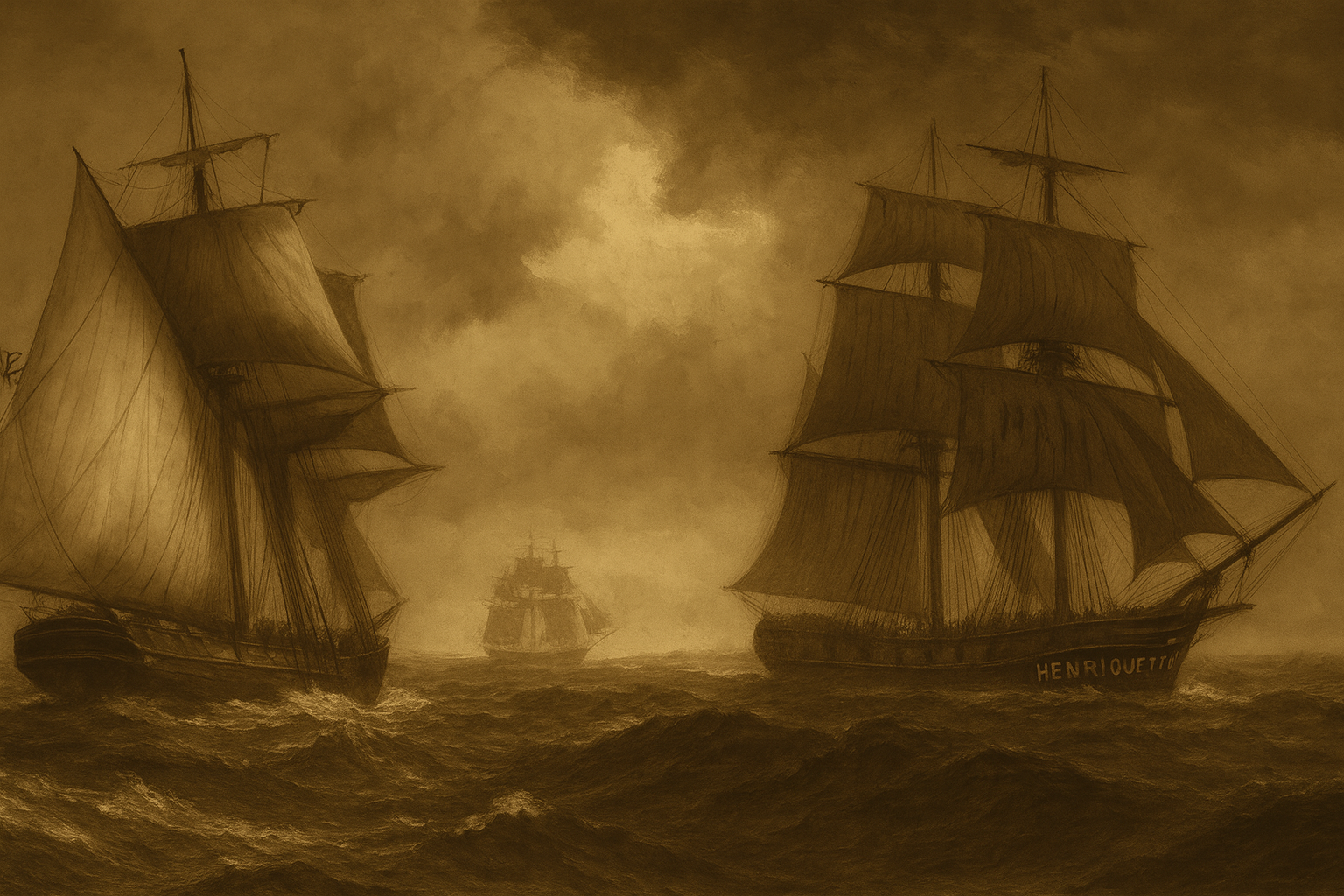
British sloops tore up and down the Gulf of Guinea, chasing the world’s biggest slave fleets
Brazil at that time was running the largest slave operation on Earth. An industrial-scale trafficking empire that made Britain’s earlier, regrettable involvement look almost provincial. So while England had moved on to arguing about tea taxes and botany, Brazil was still shipping hundreds of thousands of enslaved Africans from West Africa into Bahia and Rio.
When the Royal Navy captured Henriquetta in 1827, slapped a White Ensign on her stern and renamed her Black Joke, it wasn’t symbolic. It was a warning to the most ruthless slaving nations on the planet that Britain wasn’t just virtue signalling.
Henriquetta had been built for speed, profit and human misery. But under Commander Henry Downes, the newly reborn Black Joke became the naval equivalent of an English Bull Terrier: stocky, slightly ridiculous-looking, and completely incapable of letting go once it had its teeth into something. She sprinted after slavers twice her size, put shots through their rigging and boarded them in chases so reckless she became a legend in her own lifetime.
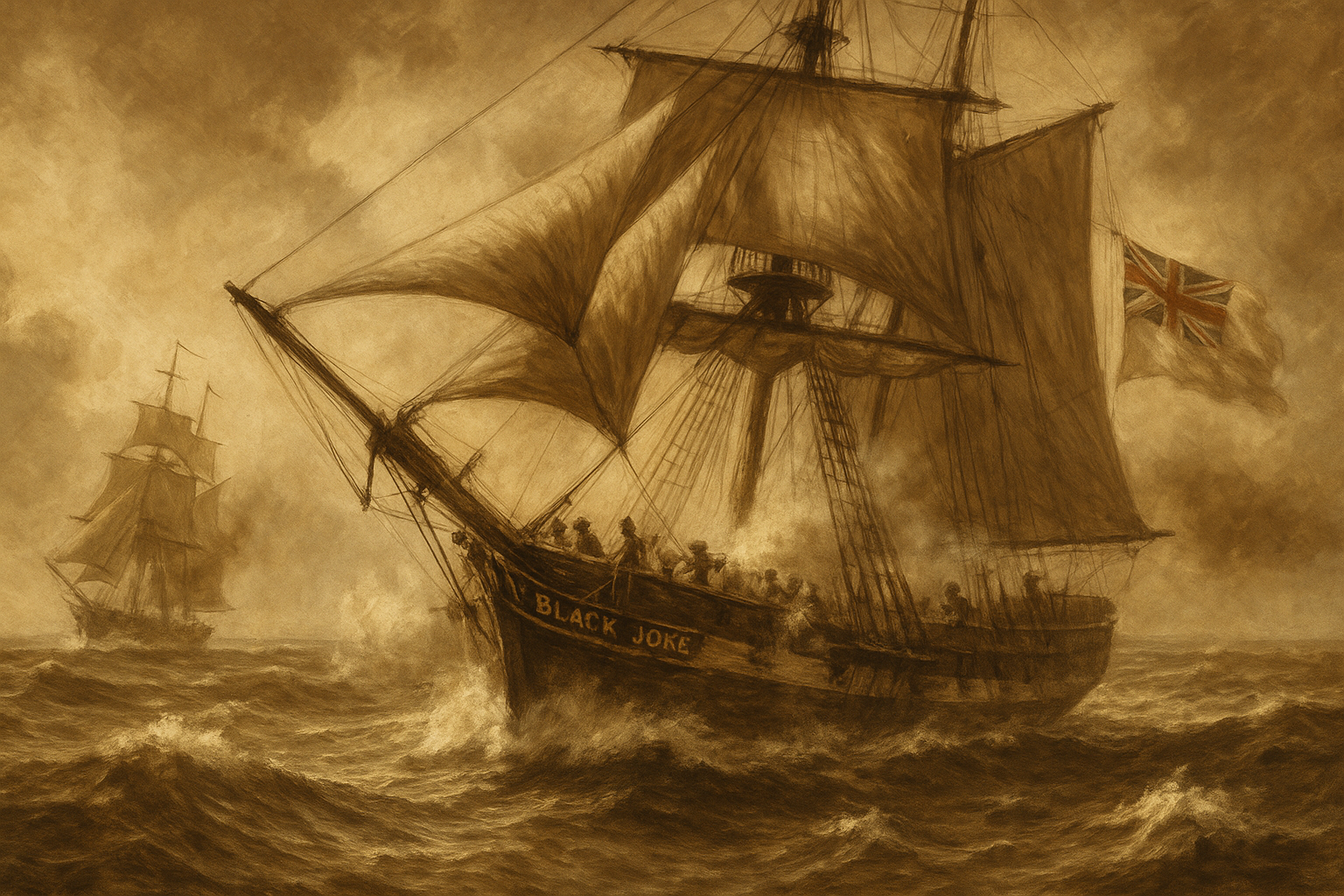
The Royal Navy captured Henriquetta in 1827, slapped a White Ensign on her stern and renamed her Black Joke
Britain didn’t just ban the trade at home and pat itself on the back. It spent most of the 19th century patrolling someone else’s coastline at its own expense, chasing the slave fleets of Brazil, Portugal and Spain. Thousands of British sailors died from malaria, yellow fever, dysentery and every tropical plague known to man, losing more men to disease than combat. But still, the squadron kept going.
Once the Atlantic trade collapsed, the real horror show was still going in the east. A thousand-year-old system built on mass castration, sex slavery and survival rates that made the Atlantic crossings look almost humane. Enslaved Africans were hauled into the Gulf, the Ottoman world and beyond. So Royal Navy ships of other squadrons rounded the Cape of Good Hope and went after those slavers too. Different ocean, same miserable job, with bombardments and blockades of ports and cities that continued too ply their trade in human misery.
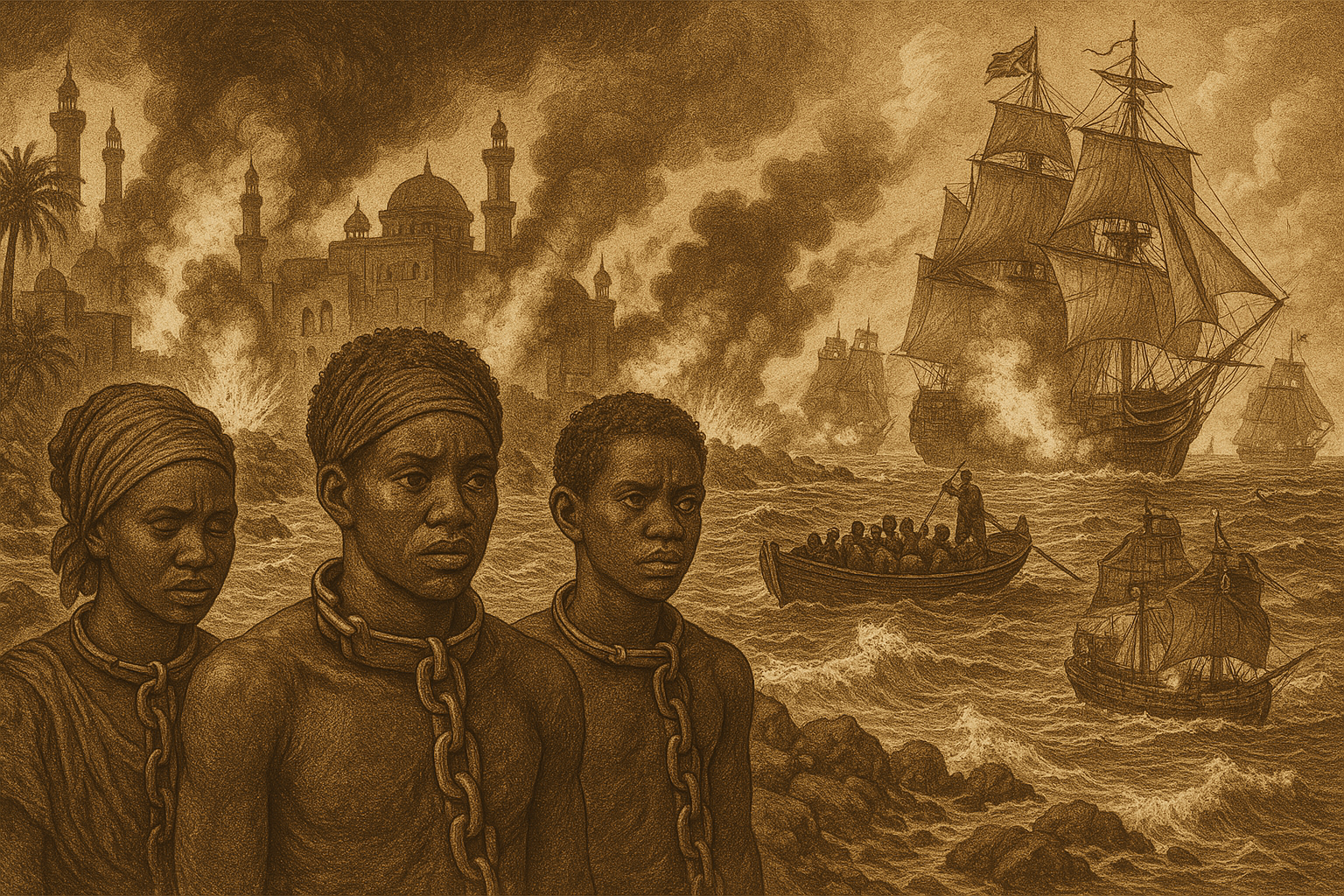
Royal Navy ships rounded the Cape of and went after other slavers with bombardments and blockades of ports and cities
So why have you never heard of the Black Joke or her companions? Because the whole episode is too messy, too awkward, too full of inconvenient heroism. It gets shunted into a polite seminar called “Mixed Legacies”, academic code for “we’d rather not mention this.”
But Black Joke and the men who sailed her deserve better. She was a ship built for darkness, repurposed for justice, crewed not by aristocrats but by ordinary grafters. Sons of farmers, carpenters, Yorkshire lads, Irish lads, London lads, the sort of men who work the trades, join the armed forces and generally keep the country running.
In the end, the Squadron didn’t disband because it failed. It disbanded because it was a victim of its own success, bullying the Atlantic slave trade out of existence and throttling a worldwide criminal enterprise. And somehow, they won. No victory parade. No fuss. Just a shrug, a mug of tea and filing the whole episode away in a dusty draw to be forgotten.
…to be continued

If you want more straight-talking tales from life afloat, and opinions on British Naval history and boats that define the English, then you’ll love our upcoming book. We're inviting early readers to join the pre-launch crew and get behind-the-scenes access as we wrestle it into shape. It’s honest, unfiltered, and occasionally useful. Sign up here to get involved, give feedback, and be part of something that’ll either be a bestseller or a brilliant cautionary tale.